
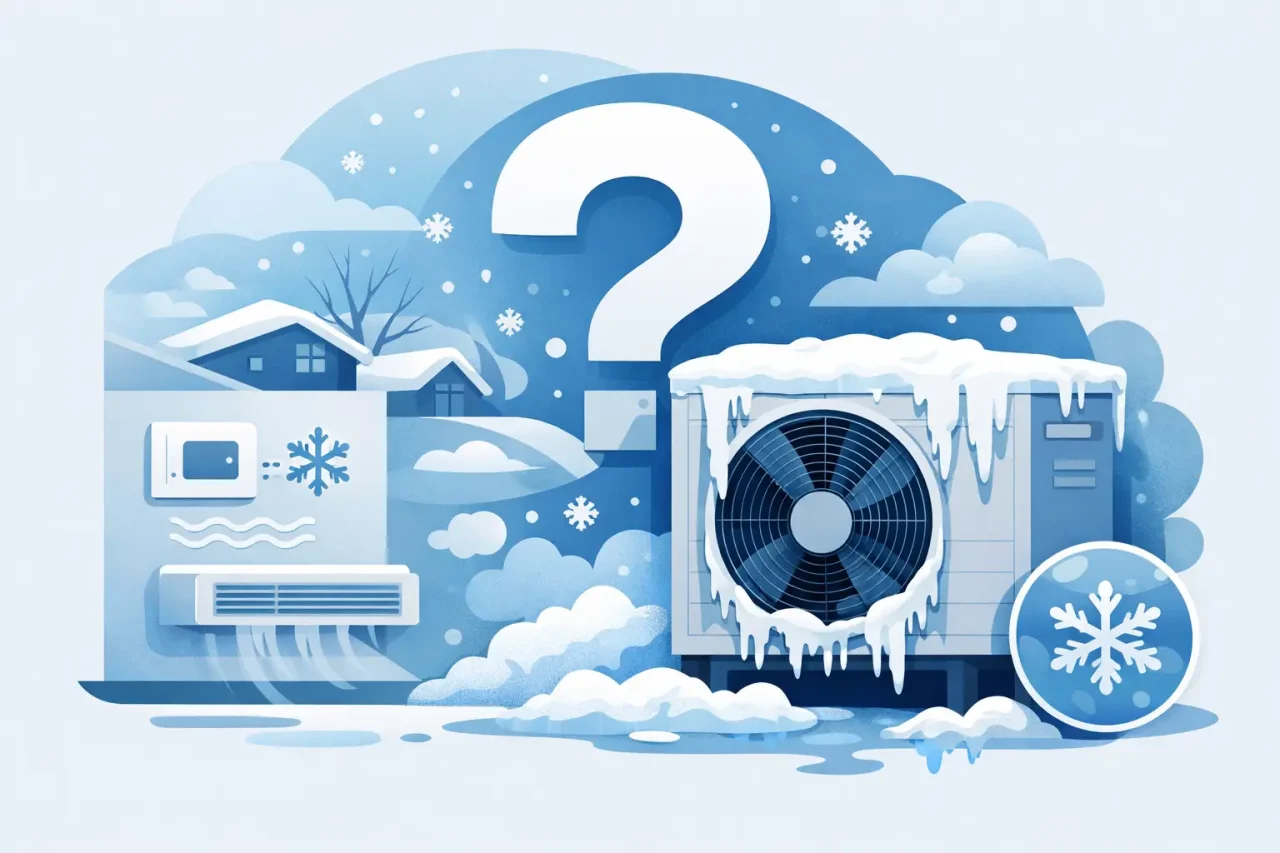
You look outside on a cold New York morning and see your unit covered in ice. The first thought is usually the same: why is my heat pump freezing, and is this a quick fix or a sign the system is about to fail? The answer depends on where the ice is forming, how much is building up, and whether the system can clear it on its own.
A little frost on the outdoor coil can be normal in winter. A solid layer of ice that keeps growing is not. If your heat pump is struggling to keep up, blowing cool air for too long, or shutting down when you need heat most, it is time to pay attention.
Why is my heat pump freezing in winter?
Heat pumps move heat rather than create it the way a furnace does. In heating mode, the outdoor unit pulls available heat from the outside air, even when temperatures are low. Because that coil gets cold, moisture in the air can collect on it and turn into frost.
That part is normal. Your system is built to handle it through a defrost cycle. During defrost, the heat pump temporarily switches operation to melt frost off the outdoor coil. You may notice steam rising, water around the base, or a brief change in airflow or sound. That can look alarming, but it often means the unit is doing exactly what it should.
The problem starts when frost turns into thick ice and stays there. If the defrost cycle is not working, airflow is restricted, or a part is failing, the system can no longer transfer heat efficiently. In New York winter conditions, that can quickly become a comfort and safety issue for homes, apartment buildings, and commercial spaces.
What is normal frost and what is a problem?
A light, even coating of frost on the outdoor unit during cold or damp weather is usually expected. It should come and go as the system runs and enters defrost mode. You may see it in the early morning, then notice it disappears later.
Heavy ice on the coil, fan guard, refrigerant lines, or base of the unit is different. If the ice is thick, keeps returning quickly, or spreads across the whole cabinet, the heat pump is not operating normally. The same is true if the indoor unit is freezing. Ice anywhere inside the system usually points to a deeper airflow or refrigerant issue.
The most common reasons a heat pump freezes up
The most common cause is restricted airflow. A dirty air filter, blocked return vents, closed registers, or buildup on the coil can reduce the air moving through the system. When airflow drops, temperatures inside the system can fall too low, which allows ice to form.
Low refrigerant is another frequent cause. If refrigerant levels are off because of a leak, pressure inside the system changes. That can make the coil get too cold and start icing over. This is not something to ignore or top off casually. Refrigerant problems need professional diagnosis, and the leak itself has to be addressed.
A defrost control problem can also leave the outdoor unit frozen. If the board, sensors, or reversing valve are not triggering defrost correctly, frost that should melt away keeps building. In many cases, the homeowner notices the ice before they realize the system has stopped defrosting altogether.
Mechanical issues matter too. A failing blower motor, damaged fan motor, or worn capacitor can reduce proper operation and lead to freezing. So can a clogged condensate drain in certain setups, especially when moisture cannot move away as intended.
Weather and installation conditions play a role as well. Snow packed around the outdoor unit, poor drainage beneath the system, freezing rain, and debris around the cabinet can all contribute to ice buildup. In the city and surrounding boroughs, heat pumps often deal with tight placements, wind exposure, and winter moisture that make these issues worse.
Why airflow problems cause so much trouble
If your heat pump is freezing, airflow is one of the first things to check because it affects both performance and system safety. A heat pump depends on steady air movement across the coil. When that airflow drops, the coil can get colder than designed, and condensation turns to ice.
This can start with something simple, like a filter that has not been changed in months. It can also happen when furniture blocks vents, tenant spaces close too many registers, or dust and debris collect on the indoor coil. In larger residential and commercial properties, airflow issues may come from duct restrictions or blower problems that are less obvious without testing.
The trade-off is that some airflow fixes are simple, while others are not. Replacing a filter is straightforward. Diagnosing weak blower performance or a dirty evaporator coil usually requires a technician.
When refrigerant is the issue
Low refrigerant does not just reduce comfort. It can cause a chain reaction that leads to icing, poor heating, higher energy use, and compressor strain. If your system runs constantly but the space still feels cold, refrigerant loss could be part of the problem.
This is one of those cases where waiting usually costs more. A heat pump with low refrigerant may continue operating for a while, but not efficiently or safely for the long term. If the compressor becomes damaged, the repair can become much more expensive than catching the leak early.
Why your defrost cycle may not be working
A properly operating heat pump should clear normal frost automatically. If it does not, the defrost cycle may be failing. Homeowners sometimes assume the system is shutting down because they hear different sounds or notice a temporary change in operation. In reality, those short changes can be normal during defrost.
What is not normal is an outdoor unit that stays frozen for hours or days. That often points to a failed sensor, control board issue, or reversing valve problem. These are not guess-and-check repairs. They need proper testing, especially in cold weather when you cannot afford repeat breakdowns.
What you can safely check before calling for service
There are a few things you can look at without taking the system apart. Check the air filter and replace it if it is dirty. Make sure supply and return vents are open and not blocked. Look at the outdoor unit and clear away leaves, snow, or debris around it, but do not chip ice off the coil or use sharp tools.
You can also confirm the thermostat is set correctly and the system has power. If the unit is in a heavy freeze-up, turning the system off and calling for service may prevent additional strain. Running a badly iced unit can make the problem worse.
Do not pour hot water over the equipment, scrape the coil, or try to force a defrost mode unless you are trained to do it. That can damage fins, wiring, or components and turn a repairable issue into a bigger one.
When to call for professional heat pump repair
If the ice keeps returning, the system is not heating well, or the outdoor unit is completely encased, professional service is the right next step. The same goes for unusual noises, short cycling, water leaks indoors, or a sudden increase in utility bills.
For homeowners, this is about protecting comfort and avoiding a no-heat emergency. For property managers and commercial operators, it is also about tenant satisfaction, equipment protection, and keeping the building functional during freezing weather. Fast diagnosis matters because the longer the system runs in distress, the more likely another part gets pulled into the failure.
At FT’s Precise Heating & Cooling, that is why the focus stays on same-day response, clear communication, and getting heat restored without unnecessary delay.
How to reduce the chances of your heat pump freezing again
Maintenance makes a real difference. Seasonal service helps catch airflow restrictions, refrigerant problems, electrical issues, and defrost failures before they become midwinter emergencies. A clean coil, proper refrigerant charge, and tested controls give the system a much better chance of handling cold and damp conditions.
It also helps to keep filters changed on schedule and the outdoor unit clear of buildup. That said, even a well-maintained heat pump can frost in winter. The goal is not to eliminate every trace of frost. The goal is to make sure the system can clear normal frost and continue heating reliably.
If you are asking why is my heat pump freezing, the safest answer is this: some frost is expected, but persistent ice is your warning sign. Pay attention early, because a system that looks slightly off today can become a no-heat call by tonight. When winter hits hard, quick action keeps a small repair from turning into a major disruption.