
When the heat cuts out in January, boiler vs furnace differences stop being a homeowner trivia question and become a real decision with comfort, safety, and cost attached to it. In New York City and the surrounding area, that choice matters even more because building layout, fuel type, winter demand, and system age can all push one option ahead of the other.
A lot of property owners use the words interchangeably, but a boiler and a furnace do not heat a building the same way. That affects how your rooms feel, what kind of maintenance you need, what can go wrong in winter, and how expensive replacement may be. If you are comparing systems for a house, apartment building, mixed-use property, or small commercial space, the right answer depends on the structure as much as the equipment.
Boiler vs Furnace Differences That Matter Most
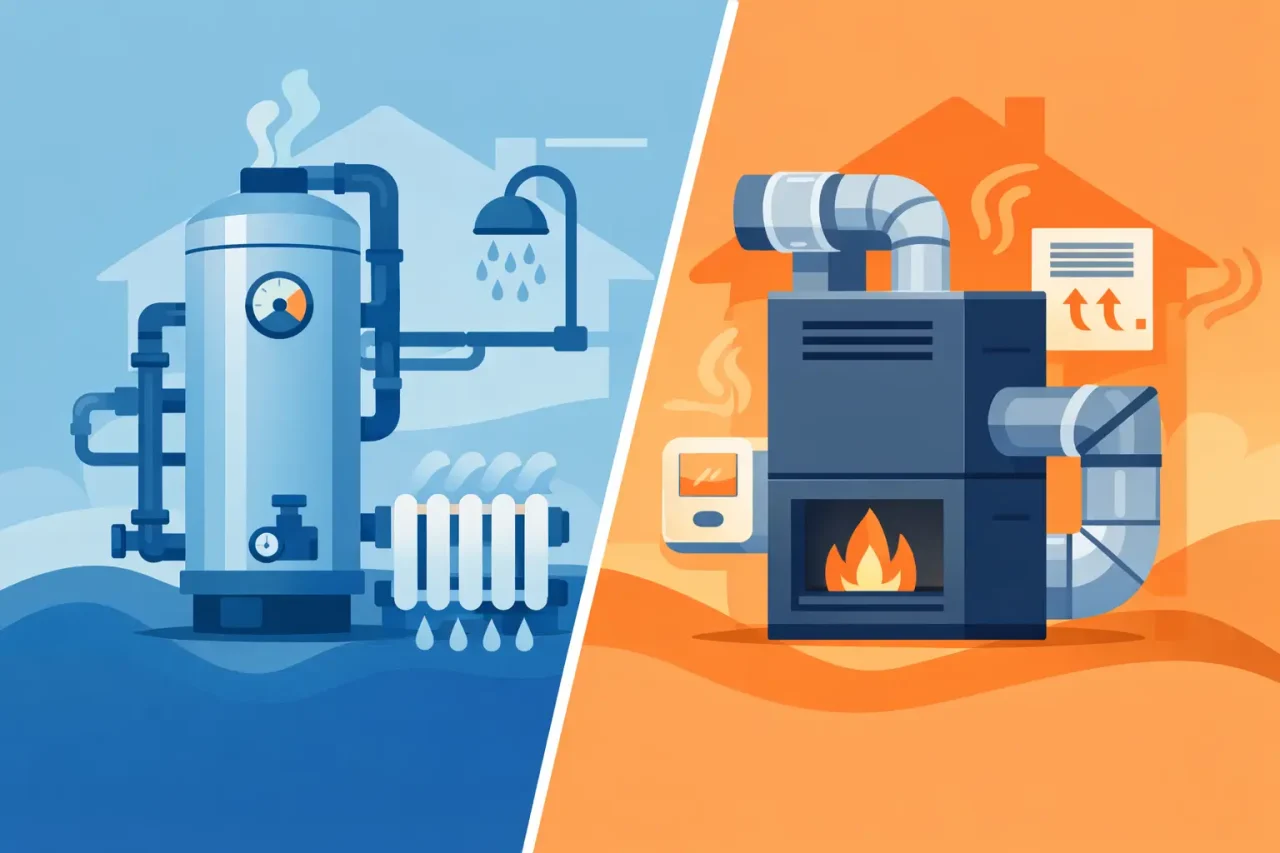
The biggest difference is how heat is produced and delivered. A furnace heats air and pushes that warm air through ductwork. A boiler heats water, and that hot water or steam moves through pipes to radiators, baseboards, or radiant systems.
That one distinction changes the experience inside the building. Furnaces usually heat spaces faster because warm air can move quickly through vents. Boilers often provide a steadier, more even heat that many people describe as more comfortable, especially during long cold stretches.
In older New York properties, boilers are common because many buildings were designed around radiators or hydronic piping. In newer homes or buildings with central air ductwork already in place, a furnace may be the simpler fit. Neither system is automatically better. The building itself often decides a lot of the outcome.
How Each System Feels Day to Day
A furnace creates forced air heat. You will usually notice air blowing from registers, temperature swings as the system cycles, and in some cases a drier indoor feel during winter. If the ductwork is well designed and sealed, a furnace can keep the property comfortable and respond quickly when the thermostat calls for heat.
A boiler heats more quietly in many cases. Instead of blowing air, it sends heat through water or steam. That can create a gentler indoor climate, with less draftiness and fewer hot-and-cold swings. For people sensitive to dusty airflow or buildings where tenants complain about uneven heating, this can be a real advantage.
That said, boilers are not always silent and trouble-free. Older steam systems can bang, hiss, or heat unevenly if they are not maintained properly. Furnaces can also be very comfortable when sized correctly and paired with good duct design. The comfort difference is real, but installation quality and upkeep matter just as much as the equipment type.
Installation and Building Fit
This is where many heating decisions are won or lost.
If a property already has ductwork for central AC, a furnace may make practical sense because the same air distribution system can often serve both heating and cooling. That can simplify installation and reduce the need for major construction.
If the property already has radiators, baseboard heat, or hydronic piping, a boiler may be the more natural replacement. Switching from a boiler to a furnace, or from a furnace to a boiler, can become expensive fast because now you are not just replacing equipment. You are changing how the whole building receives heat.
In NYC, that matters. Space is tight, older buildings have layout limitations, and many multifamily properties were built around one type of heating system. A good recommendation should account for the building envelope, existing infrastructure, occupancy, and how quickly heat needs to recover during very cold weather.
Boiler vs Furnace Differences in Efficiency and Operating Costs
Many people ask which one is cheaper to run. The honest answer is that it depends on fuel costs, insulation, equipment condition, and how well the system was installed.
Modern high-efficiency furnaces can perform very well, especially in homes with properly sealed ducts. But if ductwork leaks through unconditioned spaces, some of that heated air is lost before it reaches the rooms that need it.
Boilers can also be highly efficient, particularly hot water systems. Because water holds heat well, hydronic systems can deliver very consistent warmth. In some buildings, that translates to lower waste and better comfort per dollar spent.
Steam boilers are a separate conversation. Many older steam systems still operate throughout New York, and while they can be dependable, they are not always as efficient as newer hot water systems. Still, replacing them is not a quick yes-or-no decision. The cost of conversion may outweigh the savings, especially if the current system can be repaired or upgraded effectively.
Maintenance and Common Repair Issues
Both systems need regular service before winter. Skipping maintenance is one of the fastest ways to turn a cold morning into an emergency call.
Furnaces typically need attention to burners, heat exchangers, filters, blower components, ignition systems, and thermostat operation. Dirty filters and airflow issues are common causes of weak heat, short cycling, and rising utility bills. If a gas furnace has a cracked heat exchanger or combustion issue, that becomes a safety matter, not just a comfort issue.
Boilers need inspection of burners, pressure controls, circulator pumps, expansion tanks, valves, piping connections, and venting. On steam systems, low-water cutoffs and proper pressure settings are especially important. Leaks, trapped air, uneven radiator heating, and pressure problems can all reduce performance.
One major practical difference is that a furnace problem may show up as poor airflow or no warm air from vents. A boiler problem may show up as cold radiators, water leaks, banging pipes, or zones that do not heat evenly. For property managers and business owners, knowing the symptoms helps you report the issue faster and get the right technician on site sooner.
Safety Considerations During Winter
Any heating system that burns fuel has to be treated seriously. Gas and oil systems need correct combustion, proper venting, and routine inspection. That applies whether you have a boiler or a furnace.
Furnaces carry concerns related to combustion gases and heat exchanger integrity. Boilers have their own risks, including pressure-related issues, leaks, and failures in safety controls. Older systems deserve extra attention before the coldest part of the season because small neglected problems can turn into no-heat calls when demand is highest.
For multifamily buildings and commercial spaces, heating failure is not just inconvenient. It can affect tenants, customers, operations, and in some cases legal obligations to maintain habitable conditions. That is why fast diagnosis and clear communication matter so much when temperatures drop.
Which System Is Better for NYC Homes and Buildings?
A boiler may be the better fit if:
Your property already uses radiators or baseboard heat, you want steady heat, or you are working with an older building designed around hydronic or steam distribution. Boilers are often a strong match for brownstones, older multifamily properties, and buildings where duct installation would be disruptive or unrealistic.
A furnace may be the better fit if:
Your property already has ductwork, you want one distribution system that can support heating and central cooling, or you need fast heat response in a single-family home or light commercial space. Furnaces are often practical in newer construction and in buildings where air delivery is already built in.
The best answer usually comes from looking at the full system, not just the appliance. Age, fuel source, repair history, comfort complaints, insulation, zoning needs, and future AC plans all matter. That is why boiler vs furnace differences should be discussed in the context of your property, not as a generic internet debate.
When Replacement Makes More Sense Than Repair
If your heating system is aging, breaking down repeatedly, or struggling to keep up, repair may stop being the cost-effective choice. Frequent service calls, rising fuel bills, uneven heating, and difficulty finding parts are all signs that replacement should at least be considered.
For homeowners, the question is often budget versus reliability. For property managers and commercial operators, it is also about avoiding disruption. A planned replacement in the fall is very different from an emergency replacement during a cold snap.
At FT’s Precise Heating & Cooling, that is the practical side of the conversation we focus on most – not selling panic, but helping customers understand what is urgent, what can wait, and what decision protects the building best.
If you are weighing a boiler against a furnace, start with what your property already has, how well it heats now, and how much risk you are carrying into winter. The right heating system is the one that keeps your space warm, dependable, and ready when the temperature drops.