
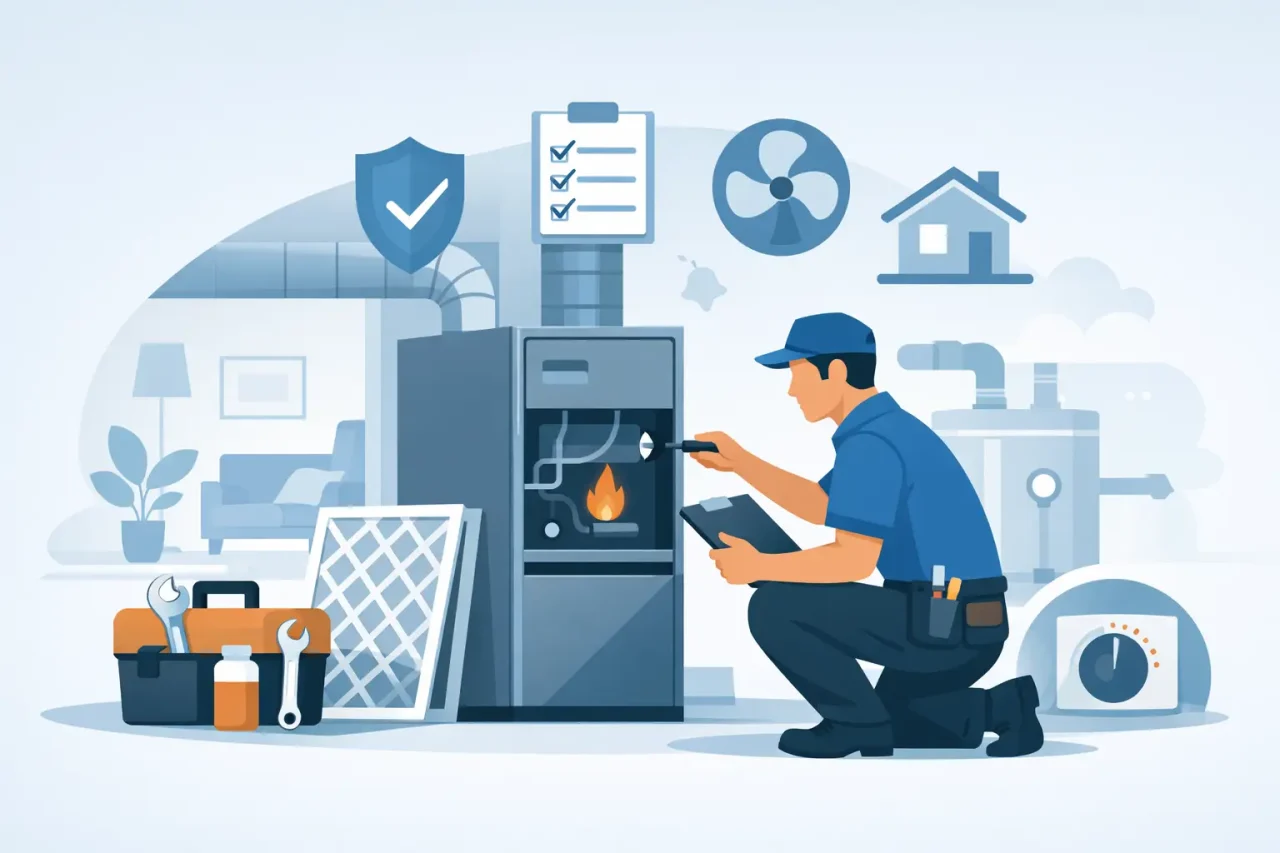
A furnace rarely picks a convenient time to fail. In New York, it usually happens on the coldest night of the week, when the house feels drafty, the airflow turns weak, or a strange smell suddenly gets your attention. This furnace maintenance guide for homeowners is built around one goal: helping you reduce breakdown risk, protect your safety, and keep heat steady when winter puts your system to work.
For many homeowners, maintenance gets delayed because the furnace seems to be running fine. That is the trap. Furnaces often show subtle warning signs before a full shutdown, and small issues like a clogged filter or dirty flame sensor can turn into no-heat calls fast. A little attention before and during the heating season can make a big difference in comfort, reliability, and repair cost.
Why furnace maintenance matters more in cold weather
When outdoor temperatures drop, your furnace runs longer cycles and has less room for error. Parts that are already worn out face more strain, and airflow problems become more noticeable because your system has to keep up with a heavier demand. In older homes and multifamily properties, that pressure can show up as uneven heating, short cycling, higher utility bills, or repeated reset attempts.
Maintenance is not just about efficiency. It is also about safety. Gas and oil furnaces involve combustion, ventilation, and electrical components that need regular inspection. If something is off, you could be dealing with poor performance, indoor air quality problems, or a situation that should not be ignored.
A practical furnace maintenance guide for homeowners
The most useful maintenance plan is the one you will actually follow. Homeowners do not need to take apart the unit or guess at burner performance. What you can do is stay on top of the basic checks that support airflow, catch visible warning signs, and help your technician spot deeper issues early.
Start with the air filter
If there is one task that matters most, it is checking the filter regularly. A dirty filter restricts airflow, which makes the furnace work harder and can lead to overheating, reduced comfort, and premature wear. In some cases, poor airflow can even cause the system to shut down as a protective measure.
During peak heating season, check the filter about once a month. If you have pets, recent renovations, or a home with a lot of dust, you may need to replace it more often. Make sure the replacement filter matches the correct size and airflow rating for your system. A filter that is too restrictive is not always better. It depends on the furnace and duct system.
Keep vents and returns open and clear
One closed vent may not seem like a problem, but several blocked vents and returns can throw off system balance and reduce airflow. Walk through the home and make sure supply registers are not covered by rugs, furniture, or storage bins. Return grilles should also stay open and free of dust buildup.
This is especially important in city homes, apartments, and tight utility spaces where furniture placement changes seasonally. If one room is much colder than the rest, restricted airflow may be part of the issue, but it can also point to duct leakage or system sizing concerns.
Listen and smell for changes
Homeowners usually notice furnace trouble before they see it. Banging, rattling, scraping, whistling, or repeated clicking are all worth paying attention to. So are sudden burning odors, musty smells from ducts, or gas odors near the unit.
Some smells have harmless causes. A dusty burning smell at the first startup of the season can happen if dust settled on components during the off-season. But if the odor is strong, does not clear, or comes with poor performance, do not ignore it. If you ever smell gas, leave the area and treat it as urgent.
Check the thermostat settings
Thermostat problems can look like furnace problems. Before assuming the unit has failed, verify that the thermostat is set to heat, the temperature setting is above room temperature, and the batteries are fresh if your model uses them. If you have a smart thermostat, check for programming errors or connectivity issues.
This sounds basic, but it rules out one of the most common causes of no-heat service calls. It also helps identify whether the issue is at the thermostat, the furnace, or somewhere in between.
Look around the furnace area
The space around the furnace should stay clean and unobstructed. Do not store paint, boxes, paper goods, cleaning products, or other combustible materials right next to the unit. Good clearance matters for safety, service access, and proper operation.
Also check for signs of water around the system. Moisture can point to venting issues, condensation concerns, or a problem with a connected humidifier or drain line. If you see soot, corrosion, or discoloration near the furnace, that is a sign to schedule professional service.
What homeowners should not try to handle alone
There is a difference between responsible maintenance and risky DIY work. Replacing filters, checking vents, and monitoring thermostat settings are reasonable homeowner tasks. Internal cleaning, gas line work, ignition repair, electrical testing, and combustion adjustments are not.
That line matters because the wrong repair attempt can create bigger damage or safety hazards. If the furnace is short cycling, blowing cold air, tripping breakers, showing ignition failure, or making loud mechanical noise, it is time for a licensed HVAC technician to inspect it properly.
What professional furnace maintenance usually includes
A professional tune-up goes beyond surface checks. During a maintenance visit, the technician typically inspects and tests key components, cleans areas that affect safe operation, checks airflow and controls, and looks for wear before it turns into a breakdown.
That may include inspecting the burner assembly, flame sensor, heat exchanger area, blower components, safety controls, venting, electrical connections, and thermostat communication. Filter condition is reviewed, system cycling is checked, and performance issues are noted clearly. For gas or oil systems, combustion-related safety checks are a critical part of the visit.
This is also when hidden issues often show up. A homeowner may only notice weak heat in one room, while the actual cause could be a failing inducer motor, dirty sensor, worn igniter, or duct problem. Maintenance gives you a chance to fix smaller concerns before they become emergency repairs.
Signs your furnace may need service now
Not every issue can wait for a seasonal tune-up. If your furnace turns on and off too quickly, struggles to keep the set temperature, blows cool air, or causes a sudden spike in heating costs, it deserves attention. The same is true if rooms are heating unevenly, the pilot or ignition acts inconsistently, or the system keeps needing resets.
Age matters too. If your furnace is 15 years old or older, maintenance becomes even more important because normal wear starts to affect reliability. That does not always mean replacement is the right move. Sometimes a well-maintained older system can keep running dependably. Other times, repeated repairs and declining efficiency make replacement the smarter financial choice. It depends on repair history, part condition, and how the unit performs under real winter demand.
Seasonal timing makes a difference
The best time to schedule furnace maintenance is before the coldest stretch of the season. Early fall is ideal, but mid-season service is still worthwhile if it has been overlooked. Waiting until the system fully stops working limits your options and increases urgency, especially during a cold snap when service demand rises across the city and surrounding counties.
For homeowners, landlords, and property managers, preventative maintenance is also about avoiding disruption. No one wants tenants calling about no heat, or a household trying to get through a freezing night with space heaters and blankets while waiting for a diagnosis.
A better way to think about furnace care
The smartest approach is simple: handle the basics yourself, take warning signs seriously, and bring in qualified help before a small issue grows. That is the difference between a furnace that makes it through winter with fewer surprises and one that leaves you scrambling when temperatures drop.
At FT’s Precise Heating & Cooling, we see the same pattern every year – the systems that get attention early are usually the ones that avoid the worst cold-weather failures. If your furnace is overdue for service, acting differently, or just not giving you confidence heading into winter, getting it checked now is the kind of decision that keeps your home warm when it matters most.