
When your heat is unreliable in January, the question stops being theoretical fast. For New York property owners, the heat pump vs furnace decision affects comfort, utility costs, winter safety, and how quickly your space recovers when temperatures drop.
Some buildings do better with one clear choice. Others need a more careful look at insulation, fuel access, electrical capacity, layout, and how the system will perform during a real Northeast cold snap. If you are replacing aging equipment or planning ahead before winter, it helps to understand where each option makes sense and where it falls short.
Heat pump vs furnace: the main difference
A furnace creates heat. A heat pump moves heat.
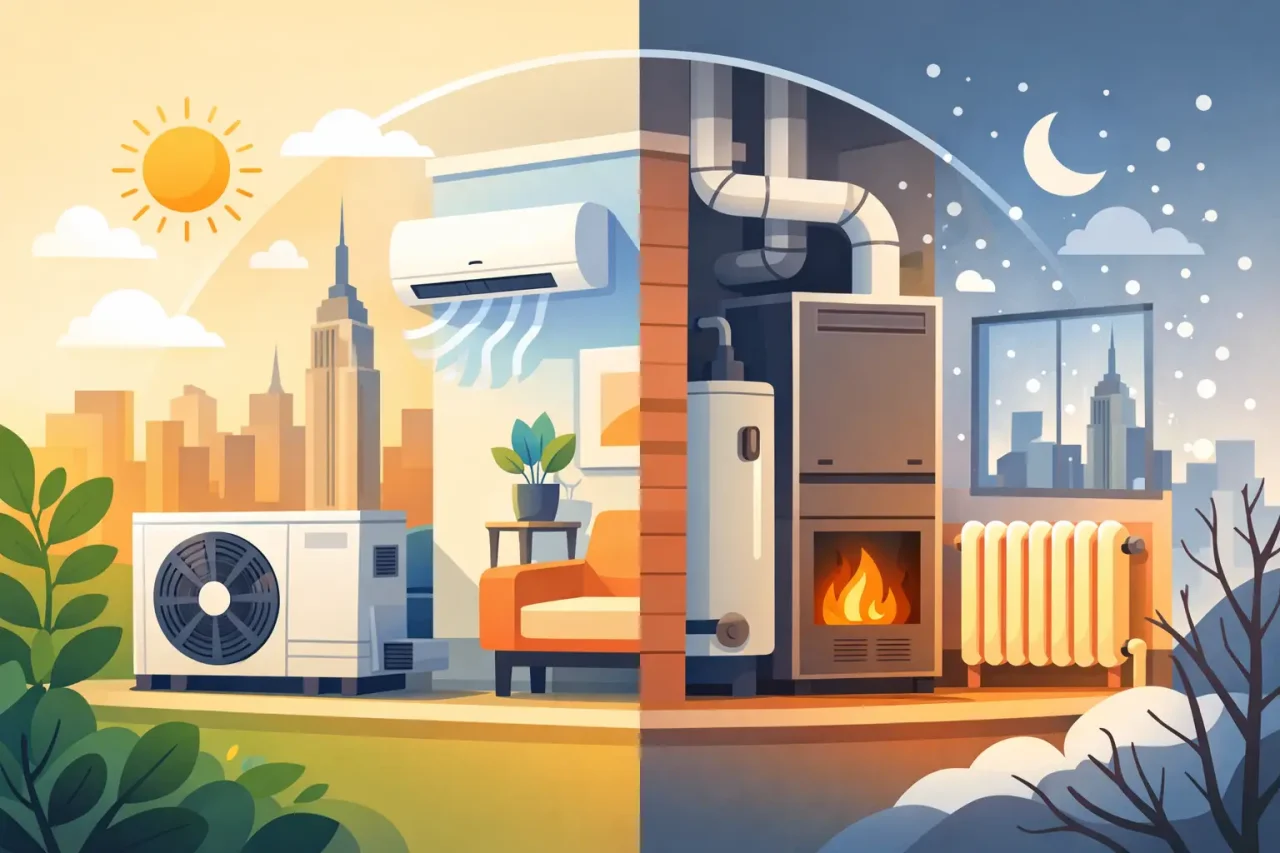
That difference matters because it affects efficiency, operating cost, and cold-weather performance. A gas or oil furnace burns fuel to produce warm air and send it through ductwork. An electric furnace uses resistance heat, but in this market, when people say furnace, they usually mean gas or oil. A heat pump pulls heat from outdoor air and transfers it indoors. In many systems, it can also reverse in summer and cool the property.
For homeowners and building managers in NYC and nearby counties, that means a heat pump can potentially cover both heating and cooling with one system. A furnace, on the other hand, usually handles heat only and may work alongside a separate AC system.
Where heat pumps make sense
Heat pumps are attractive for a simple reason – they can be very efficient, especially in mild to moderately cold weather. If you are replacing both your heat and AC, a heat pump can be a practical all-in-one solution. For homes using ductless mini-splits or properties with rooms that stay uneven in temperature, heat pumps also offer strong zoning flexibility.
They are often a good fit for apartments, renovated townhomes, additions, and homes without existing gas service. They also appeal to owners who want lower on-site fuel use and modern controls such as smart thermostats.
In shoulder seasons, a heat pump usually shines. During fall and spring, it can maintain comfort efficiently without the stop-and-start feel some older systems have. Many people also like the steady, even heat they provide.
But this is where the sales pitch can get too simple. Heat pumps do not perform the same way in every building. Older homes with air leaks, poor insulation, undersized equipment, or high heating demand can struggle if the system is not selected and installed properly. Cold-climate models have improved a lot, but design matters.
Where furnaces still have a strong advantage
A furnace remains a dependable choice in cold-weather markets because it delivers strong, fast heat. When outdoor temperatures plunge, a properly sized gas furnace can raise indoor temperature quickly and maintain it with confidence.
That matters in the Bronx, Queens, Brooklyn, Manhattan, Westchester, and across the Tri-State area, where winter storms and freezing nights are not rare events. If your priority is raw heating performance during the coldest part of the year, a furnace still has a lot going for it.
Furnaces also make sense in buildings that already have ductwork and gas service. In many replacements, staying with a furnace can reduce installation complexity. For some property managers, that means less disruption and fewer building modifications.
There is also a reliability argument. Gas furnaces are a familiar solution, parts are widely available, and many technicians know them well. If you have an older but serviceable ducted system, replacing the furnace may be more straightforward than converting to a different heating setup.
Heat pump vs furnace in a New York winter
This is the section that matters most locally. The real heat pump vs furnace question is not what works on a brochure. It is what keeps tenants, families, staff, and customers comfortable when it is 20 degrees outside and the wind is pushing through every weakness in the building envelope.
A high-quality cold-climate heat pump can absolutely work in New York. The issue is whether it is the right match for the property. If the building is well insulated and the heat loss calculation supports it, a heat pump may handle the load effectively for most or all of the winter. If the property is older, drafty, or has high heat demand, backup or supplemental heat may be the smarter move.
A furnace generally has the edge in extreme cold. It produces hotter supply air, recovers faster after doors open repeatedly, and handles heavy winter demand with less strain. For commercial spaces, mixed-use properties, and larger homes where heat loss is significant, that can be the deciding factor.
The safest answer is often not one-size-fits-all. Some properties do best with a dual-fuel setup, where a heat pump handles milder conditions and a furnace takes over when temperatures drop harder. That approach can balance efficiency and winter security.
Installation cost and operating cost are not the same thing
A lot of heating decisions go sideways because people focus only on the upfront number. Equipment cost matters, but so does what you will pay month after month and what it takes to keep the system dependable.
A furnace replacement can be less expensive upfront if you already have compatible ductwork, venting, and fuel service. If the gas line, chimney liner, or oil components also need work, the number can change quickly.
A heat pump may cost more initially depending on the type of system and whether electrical upgrades are required. Ductless systems, ducted air handlers, outdoor units, line sets, and controls all affect price. If you are replacing both an AC and heating system at the same time, the math may become more favorable.
Operating cost depends on utility rates, system efficiency, weather, and building condition. A heat pump can be cheaper to run in many situations, but not automatically in every New York building. A furnace may cost more or less over time depending on gas prices, oil prices, maintenance needs, and how often the system cycles under heavy load.
That is why honest system planning matters more than broad promises. The right question is not which system is cheaper in general. It is which system makes financial sense for your property.
Comfort, noise, and everyday use
Comfort is not just about reaching the thermostat setting. It is about how the space feels.
Heat pumps tend to provide longer, gentler heating cycles. That can create more even temperatures, especially in homes where certain rooms usually run too warm or too cold. They also offer cooling, which is a major advantage when summer humidity hits the city.
Furnaces usually produce warmer air at the vents. Many people prefer that feeling in winter because the heat comes on strong and the space warms up fast. In a building with frequent door traffic or large temperature swings, that stronger output can feel more reassuring.
Noise depends more on equipment condition and installation quality than on the category alone. An aging furnace with blower issues can be loud. A poorly placed outdoor heat pump unit can be disruptive. Good installation and maintenance make the biggest difference.
Maintenance and service realities
No heating system should be treated like an appliance you ignore until it quits. Both options need regular maintenance if you want dependable winter performance.
Furnaces need inspection of burners, heat exchangers, ignition components, airflow, filters, and safety controls. Fuel-burning equipment also raises combustion and venting concerns that should never be guessed at.
Heat pumps need coil cleaning, refrigerant checks, electrical testing, defrost cycle evaluation, filter changes, and airflow verification. Because they often run year-round for heating and cooling, wear can show up differently than it does on a seasonal furnace.
For busy property owners, the practical issue is response time when something fails. If the system goes down during a cold snap, you want fast diagnosis, clear answers, and a fix that restores heat without unnecessary delays. That service side matters just as much as the equipment decision.
Which system is right for your property?
If you want one answer, here it is: it depends on the building.
A heat pump may be the better fit if you need both heating and cooling, want high efficiency, have a well-sealed home or upgraded apartment, or prefer a ductless setup. A furnace may be the stronger choice if your property faces heavy winter demand, already has gas-fired ducted heat, or needs fast, powerful recovery in freezing weather.
For some owners, the smartest path is not choosing sides. It is building a heating plan around how the property actually performs. That may mean furnace replacement, heat pump installation, system upgrades, or a hybrid approach designed for local winter conditions.
At FT’s Precise Heating & Cooling, that is how we look at it – not as a trend, but as a comfort and safety decision. If your current system is aging, making strange noises, short cycling, or leaving parts of the property cold, now is the time to get clear answers before the next freeze tests it for you.