
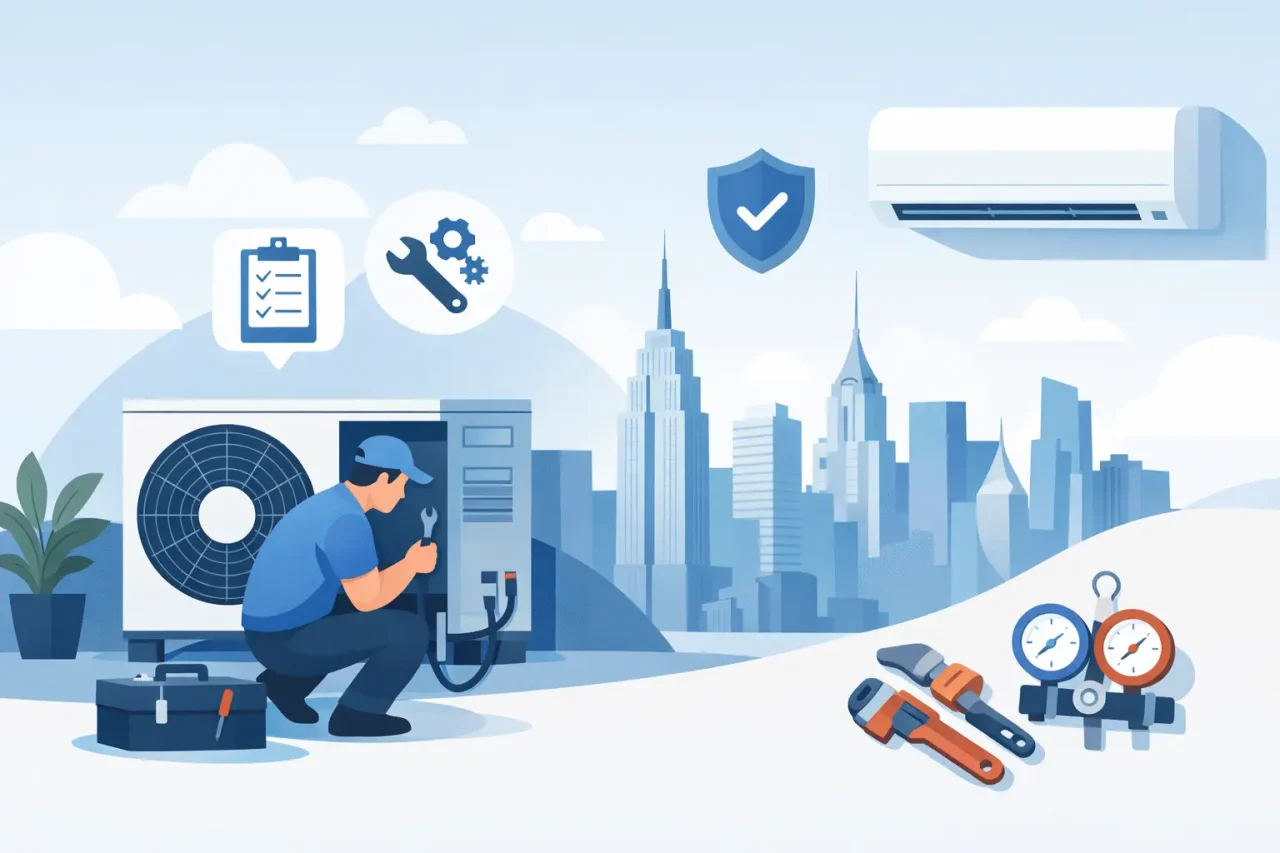
A heat pump usually does not fail at a convenient time. It starts with weaker airflow, longer run cycles, a room that never quite reaches the set temperature, or an energy bill that suddenly feels off. That is why a solid heat pump maintenance guide matters for homeowners, property managers, and business owners across New York City and the surrounding area. Good maintenance is not just about efficiency. It is about protecting comfort, avoiding emergency calls, and keeping your system ready when the weather swings hard.
In the Tri-State area, heat pumps work through humid summers, freezing winter nights, shoulder-season temperature swings, and the daily wear that comes with dense urban living. Rooftop exposure, tight mechanical spaces, apartment-by-apartment temperature demands, and heavy system use all add pressure. A neglected system may still run, but it will usually run harder, cost more, and become more likely to break down when you need it most.
What a heat pump maintenance guide should help you avoid
The biggest maintenance mistake is waiting for a full breakdown. Most heat pump problems give warning signs first. Airflow may drop off. The outdoor unit may get louder. Defrost cycles may seem excessive. The thermostat may call for heating or cooling, but the response feels delayed.
When those early signs are ignored, small issues can become expensive ones. A dirty coil can reduce efficiency and strain the compressor. A clogged drain can create moisture problems. A loose electrical connection can affect performance or lead to an unexpected shutdown. In a residential setting, that means discomfort and stress. In a commercial or multi-unit building, it can quickly turn into tenant complaints, operational disruption, and urgent repair costs.
Routine maintenance lowers that risk. It also helps you catch the difference between a simple tune-up issue and a component that is wearing out.
Heat pump maintenance guide for every season
Heat pump care works best when it follows the calendar. In this region, spring and fall are the most practical times for professional service because they prepare the system before peak demand hits.
Spring maintenance before cooling season
Before summer arrives, your system should be checked for cooling performance, refrigerant issues, airflow restrictions, and drain line problems. This is also the time to clean coils, inspect the outdoor unit, test thermostat operation, and make sure the blower components are in good shape. If your heat pump struggled through winter, spring service can also reveal wear that built up during the heating season.
Fall maintenance before heating season
Fall service is just as important, especially in New York where heating reliability becomes urgent fast. A technician should inspect electrical components, test heating mode, confirm the defrost cycle is working properly, and check whether the unit is delivering consistent warm air. If there are signs of poor performance, it is far better to address them before the first real cold snap.
What you can do monthly
Homeowners and building staff can handle a few basic tasks between service visits. Check and replace or clean the air filter as needed. Keep outdoor units free of leaves, trash, and debris. Make sure vents are not blocked by furniture, storage, or curtains. Pay attention to new sounds, weak airflow, or unusual cycling patterns.
These steps are simple, but they matter. Restricted airflow is one of the most common reasons a heat pump loses efficiency.
The maintenance tasks that matter most
Not every service checklist has equal value. Some tasks are basic housekeeping. Others directly affect reliability, efficiency, and system life.
Filter care comes first. A clogged filter limits airflow, makes the system work harder, and can affect indoor comfort in every room. In homes with pets, renovation dust, or high occupancy, filters may need more frequent attention.
Coil cleaning is also critical. Indoor and outdoor coils collect dirt over time, and that buildup reduces heat transfer. When that happens, your system uses more energy to do less work. In city environments, outdoor units often collect grime faster because of traffic residue, pollen, and general air pollution.
Electrical inspection should never be skipped. Loose wires, worn contactors, and failing capacitors are common causes of poor performance and sudden shutdowns. Catching those problems early can prevent a no-heat or no-cooling emergency later.
Drain line and condensate checks help prevent water damage and moisture issues. This is especially important in basements, utility closets, and commercial spaces where unnoticed leaks can create larger property problems.
Refrigerant levels should also be checked when performance is off. Low refrigerant is not a maintenance item in the sense of topping it off like fuel. If levels are low, there is usually a leak or another issue that needs repair. A proper diagnosis matters.
Signs your heat pump needs service now
Some issues can wait for a scheduled appointment. Others should be addressed quickly.
If your heat pump is blowing cool air in heating mode, struggling to keep up, turning on and off too often, making grinding or buzzing sounds, or causing a sudden jump in utility costs, it is time for a professional inspection. Ice buildup that does not clear properly is another warning sign. So is a thermostat that seems accurate one day and ineffective the next.
For property managers and commercial operators, inconsistency is often the first clue. One floor feels fine while another stays cold. One tenant reports stale airflow while another says the unit never stops running. Those uneven comfort complaints often point to maintenance-related problems before they become full equipment failures.
DIY maintenance vs professional service
There is a practical line between helpful owner care and work that should be left to licensed technicians.
It makes sense to change filters, clear debris around the outdoor unit, check thermostat settings, and watch for obvious warning signs. Those steps support system health and help you spot issues early.
It does not make sense to open electrical panels, handle refrigerant components, or guess at why a unit is short cycling. Heat pumps are more complex than many people realize, especially ductless multi-zone systems and larger commercial setups. A wrong move can damage equipment, create a safety hazard, or turn a minor repair into a major one.
Professional maintenance is where the deeper value comes in. A trained technician can test performance, measure airflow, inspect controls, identify wear patterns, and explain clearly whether the system needs a tune-up, a repair, or a longer-term replacement plan.
Why local conditions change the maintenance schedule
A heat pump in a quiet suburban setting does not face the same wear as one installed on a city rooftop, behind a restaurant, or beside a busy street. In NYC and nearby counties, systems often deal with tighter installation spaces, more airborne debris, and heavier year-round demand. That means maintenance timing may need to be more frequent depending on the property.
It also depends on the type of building. A single-family home with one system has different needs than a brownstone with multiple indoor heads, a mixed-use property with commercial tenants, or a multi-unit residential building where comfort complaints affect occupancy. There is no one-size-fits-all schedule. The right plan depends on system age, usage, access, and how critical uninterrupted heating and cooling are to the property.
That is why many local customers benefit from working with a dependable service team that knows the region, responds quickly, and understands how heat pump systems perform under local conditions.
When maintenance is no longer enough
Maintenance extends equipment life, but it does not stop aging. If your heat pump needs frequent repairs, struggles during temperature extremes, or no longer keeps the space comfortable without constant adjustments, it may be time to consider replacement. The same is true if major components are failing on an older unit.
That decision should be based on cost, age, and reliability rather than guesswork. Sometimes a repair makes perfect sense. Sometimes continued patchwork ends up costing more than a planned replacement. A trustworthy HVAC company should tell you the difference plainly.
At FT’s Precise Heating & Cooling, that practical approach matters. Customers across the Bronx, Manhattan, Brooklyn, Queens, Westchester, and the greater Tri-State area need clear answers, fast diagnosis, and service that protects comfort without wasting time.
A smarter way to protect comfort
The best heat pump maintenance guide is the one you actually follow before the system starts failing. If your unit is working today, that is the right time to clean, inspect, test, and prepare it for the next season. Waiting until the house is cold or the building starts getting complaints is always the harder option.
A well-maintained heat pump gives you more than lower energy use. It gives you fewer surprises, steadier comfort, and a better chance of getting through winter and summer without disruption. For any home or commercial property, that peace of mind is worth staying ahead of.