
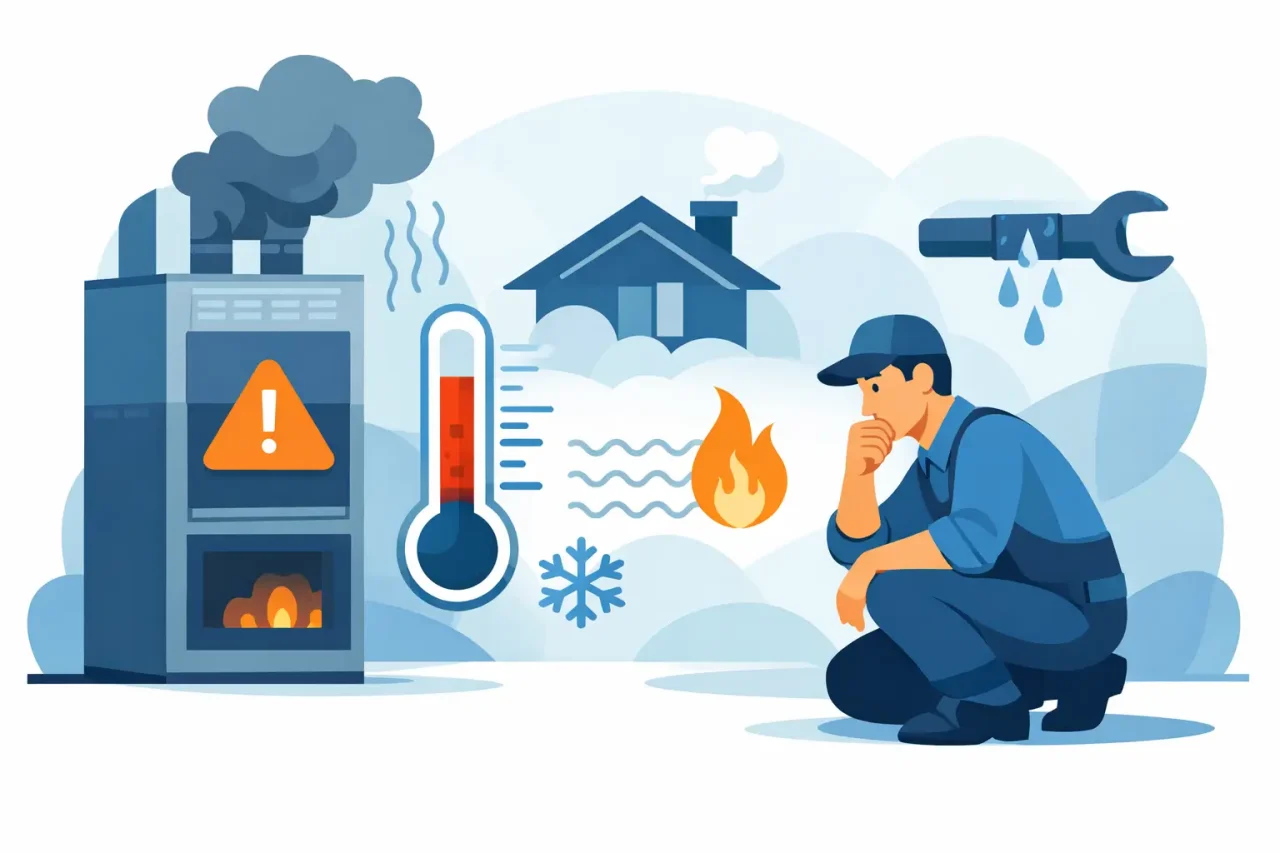
When your furnace starts acting up in the middle of a New York winter, the warning signs usually show up before the system fully quits. Knowing the top signs of furnace failure can help you act early, avoid a no-heat emergency, and protect your home, tenants, or business from a much bigger disruption.
A furnace rarely fails without leaving clues. The problem is that many people wait too long because the heat is still technically on, even if the system is already struggling. In a house, that can mean waking up to a freezing bedroom. In a multi-unit property or commercial space, it can turn into tenant complaints, operational delays, and urgent repair costs at the worst possible time.
Top signs of furnace failure homeowners should not ignore
One of the clearest signs is a furnace that runs but does not heat the space the way it used to. If rooms stay cold, the thermostat setting keeps climbing, or the system runs longer without reaching the desired temperature, something is wrong. Sometimes the issue is minor, such as a dirty filter or thermostat problem. Other times, it points to a failing blower motor, ignition issue, heat exchanger problem, or fuel delivery issue.
Weak airflow is another major red flag. If warm air barely comes through the vents, the furnace may be struggling to move air through the system. In some properties, weak airflow can also be tied to duct issues, but from the customer side the result is the same – uneven comfort, rising frustration, and a heating system that no longer performs reliably.
Unusual cycling should also get your attention. A furnace that turns on and off too often, runs for very short periods, or keeps restarting may be failing to complete a proper heating cycle. Short cycling puts stress on system components and can lead to a complete breakdown faster than many owners expect.
Strange sounds and smells often mean trouble
A healthy furnace makes some noise, but it should not sound aggressive, erratic, or new. If you start hearing banging, rattling, screeching, grinding, or loud humming, those sounds usually mean parts are loose, worn, or under strain. A blower problem may create one type of sound. A burner or ignition problem may create another. The exact cause varies, but the pattern matters – when a furnace suddenly sounds different, it deserves attention.
Smells matter too. A brief dusty odor at the start of the season can be normal. A persistent burning smell is not. If you notice something that smells electrical, like overheated wiring or hot plastic, shut the system down and have it checked. If you smell gas near a gas furnace, leave the area and follow emergency safety procedures right away.
Odors are one of those areas where it depends on timing and intensity. A mild smell after months of inactivity may clear quickly. A strong smell that lingers or returns is a warning, not a seasonal quirk.
Uneven heat across the property
Many customers first notice furnace trouble not in the equipment room, but in the rooms people actually use. One apartment is comfortable, another is freezing. The first floor feels okay, but upstairs never warms up. A back office stays cold all day while the front area overheats.
Uneven heating can be caused by airflow restrictions, thermostat issues, duct problems, or a furnace losing capacity. It does not always mean the furnace is about to fail that same day, but it often means the system is no longer operating the way it should. In colder months, that gap can widen quickly.
For property managers and business owners, uneven heat is more than a comfort issue. It affects tenant satisfaction, daily operations, and in some cases building safety. If the complaints are increasing, the furnace should be evaluated before a partial problem becomes a no-heat call.
Rising utility bills can point to hidden furnace problems
If your heating bill jumps without a major weather shift or usage change, your furnace may be losing efficiency as it struggles to do the same job. Older systems often start declining gradually, which makes the change easy to miss at first. The unit still runs, so it feels functional. But behind the scenes, it may be working harder, cycling more often, or burning more fuel to maintain basic comfort.
This is one of the top signs of furnace failure that gets overlooked because people blame the season instead of the equipment. Winter bills do rise, of course. But if the increase feels out of line with what you normally expect, it is worth having the system checked.
An inefficient furnace does not always need full replacement right away. Sometimes a repair or maintenance visit can restore performance. But if the system is older and multiple issues are stacking up, replacement may be the smarter long-term move.
Yellow burner flame instead of blue
For gas furnaces, burner flame color can tell you a lot. A steady blue flame is typically what you want. If the flame looks yellow or irregular, that can indicate a combustion problem. This is not something to ignore or guess at.
Combustion issues can affect efficiency and safety. If you suspect a problem with the burner flame, have the system inspected by a licensed technician. In heating season, fast diagnosis matters because a furnace with a combustion issue should not be left to operate unchecked.
The furnace is old and breaking down more often
Age by itself does not always mean immediate failure, but it changes the risk. Many furnaces become more vulnerable after 15 to 20 years, especially if maintenance has been inconsistent or the system has worked through many hard winters. In New York, heating equipment gets tested. If your furnace is older and needs repair after repair, that pattern usually tells you where things are heading.
The real question is not just whether it can be repaired again. It is whether you can trust it when temperatures drop hard and response times across the city get tighter because everyone else is calling too.
Frequent repairs also create a cost trade-off. A single repair may make sense. A second or third issue in the same season may not. At that point, continuing to patch an aging system can become more expensive and more disruptive than planning a replacement.
Warning signs that need immediate attention
Some symptoms call for urgent service, not next-week scheduling. If the furnace will not turn on, blows cold air, trips the breaker repeatedly, shuts down unexpectedly, or leaves the property without reliable heat, that is an immediate problem. The same is true if you smell gas, notice signs of soot, or suspect carbon monoxide issues.
For homes, that means protecting your family from cold and safety risks. For apartment buildings and commercial properties, it means protecting occupants, avoiding escalation, and restoring normal operation as fast as possible.
This is where working with a local team that understands winter urgency matters. FT’s Precise Heating & Cooling responds with the mindset that heat loss is not a minor inconvenience. It is a service priority.
What to do when you notice the top signs of furnace failure
Start with the basics. Check the thermostat setting, make sure the system has power, and look at the air filter if it is safe and accessible. A clogged filter can contribute to airflow and cycling problems. If those basics do not resolve the issue, the next step is professional diagnosis.
Avoid waiting for a total shutdown if the furnace is already showing multiple warning signs. That delay often turns a manageable repair into an emergency call during the coldest part of the week. Early service gives you more options. You may be able to repair the issue before secondary damage spreads to other components.
If the system is older, ask for a clear assessment of repair condition versus replacement value. Straight answers matter. In some cases, a targeted repair is the right move. In others, replacement is the safer decision for comfort, reliability, and operating cost.
A dependable furnace should heat your space evenly, run with normal sound levels, and respond when you need it. If your system is falling short in any of those ways, trust what it is telling you. The best time to address a furnace problem is before a bitter cold night makes the decision for you.