
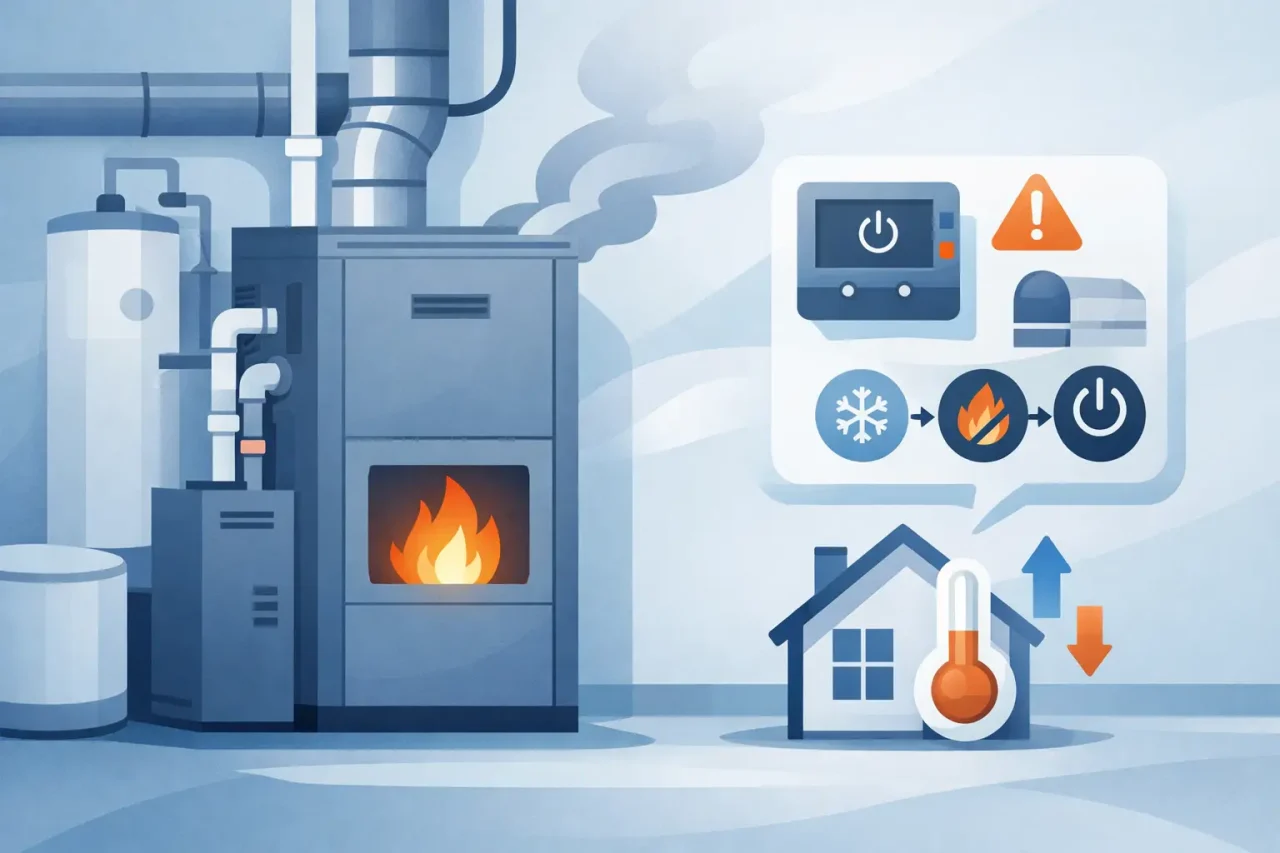
You notice the heat kick on, warm air starts moving, and then the furnace shuts off again before the space feels comfortable. If you’re asking, why does furnace keep shutting off, you’re usually dealing with short cycling – a problem that can raise energy bills, strain equipment, and leave your home or building cold when you need steady heat most.
In New York City and the surrounding area, that is not a small inconvenience. For homeowners, property managers, and commercial operators, a furnace that keeps turning off can quickly become a comfort issue, a tenant issue, and sometimes a safety issue. The good news is that this problem often points to a handful of common causes, and some are simple enough to spot before they turn into a full breakdown.
Why does furnace keep shutting off? The most common reasons
A furnace is supposed to run in cycles, but those cycles should be long enough to actually warm the space. When the unit starts, stops, and starts again too quickly, something is interfering with normal operation.
One of the most common causes is restricted airflow. A clogged air filter can make the furnace overheat, and when that happens, the system shuts itself down to protect the heat exchanger and other internal components. Once it cools off, it may restart, only to repeat the same pattern. This is one of the first things to check because it is simple, affordable, and often overlooked.
Thermostat issues are also common. If the thermostat is reading the room incorrectly, installed in a bad location, or malfunctioning, it can tell the furnace to stop before the space reaches the set temperature. In apartments, mixed-use properties, and multi-room homes, poor thermostat placement can cause especially uneven heating.
Another possibility is a dirty flame sensor. The flame sensor is a safety component that confirms the burners are lit properly. If it is coated with buildup, it may not detect the flame correctly, and the system will shut off as a precaution. This can look like the furnace starts normally, runs briefly, then cuts out.
A blocked or dirty exhaust vent can also cause shutdowns, especially on high-efficiency units. Furnaces need to vent combustion gases safely. If the venting is restricted by debris, snow, ice, or internal blockage, the furnace may stop to prevent unsafe operation.
Then there is the possibility of a larger repair issue, such as a failing limit switch, a blower motor problem, ignition trouble, or an oversized furnace. Oversized equipment sounds like it would be better, but it can actually heat too quickly and shut off before delivering balanced comfort through the space.
What to check before calling for service
If your furnace keeps shutting off, there are a few basic checks worth making first. Start with the air filter. If it looks dirty, replace it. A filter that has gone unchanged for months can create enough airflow restriction to trigger overheating.
Next, check the thermostat settings. Make sure it is set to heat and the fan setting is on auto unless there is a reason to run it continuously. If the thermostat uses batteries, replace them. It is also worth looking at the location. If it sits near a draft, a sunny window, or a heat-producing appliance, the reading may not reflect the actual room temperature.
Take a look at your vents and registers too. If too many are closed or blocked by furniture, the system may struggle to move air properly. In some city apartments and commercial spaces, changes to layout and storage can unknowingly restrict airflow.
If you have a high-efficiency furnace, check whether the intake or exhaust pipes outside are blocked. During winter weather, snow, ice, or debris can interfere with venting. Do not force anything apart if it is frozen or hard to reach. At that point, it is better to bring in a licensed technician.
These checks can help, but they do not cover every possibility. If the system keeps short cycling after a new filter and basic thermostat review, it is time for a professional diagnosis.
When short cycling becomes more than an inconvenience
A furnace that keeps shutting off is not just annoying. It places extra wear on the system because startup is one of the hardest parts of the heating cycle. More starts and stops mean more stress on the ignitor, blower motor, control board, and other working parts.
It can also increase your heating costs. Instead of running efficiently and steadily, the furnace keeps firing up without completing an effective cycle. You end up paying for heat that never fully settles into the space.
For property managers and business owners, the problem can spread beyond the mechanical room. Tenants may report cold rooms, inconsistent temperatures, or noisy operation. In commercial settings, comfort complaints can affect staff productivity and customer experience. If the building is relying on an aging furnace, repeated shutdowns may be an early warning that the unit is approaching a more serious failure.
Why does furnace keep shutting off in older NYC-area systems?
Older furnaces often shut off for reasons tied to wear, dirt buildup, and deferred maintenance. Burners can become dirty, sensors lose reliability, belts and motors wear down, and safety controls become less consistent. In many homes and buildings across the Bronx, Brooklyn, Queens, Manhattan, and nearby counties, heating systems work hard through long winters and do not always get the yearly attention they need.
That does not automatically mean replacement is the answer. Sometimes a professional cleaning, sensor service, or control repair is enough to restore normal cycling. Other times, especially if the furnace is older and repair calls are becoming frequent, replacement may be the more practical long-term move. It depends on age, condition, repair cost, and how dependable the system needs to be for the property.
For example, a homeowner may choose repair if the unit is otherwise solid and the issue is isolated. A property manager overseeing multiple tenants may lean toward replacement sooner if recurring shutdowns risk complaints, emergency calls, and winter interruptions. The right answer is not always the cheapest fix today. It is the one that protects comfort and reliability going forward.
What a technician looks for during diagnosis
When a licensed HVAC technician inspects a furnace that keeps shutting off, the goal is to find the actual cause rather than guess. That means checking airflow, burner performance, ignition sequence, flame sensing, venting, limit switches, blower operation, and thermostat communication.
A proper diagnosis matters because several problems can look the same from the outside. A dirty filter, a failing flame sensor, and a bad limit switch may all cause repeated shutdowns, but the repair approach is completely different. Quick assumptions can waste time and money.
At FT’s Precise Heating & Cooling, the focus is on fast diagnosis and clear communication because no one wants to wait through a cold day for vague answers. Whether the issue affects a house, apartment building, or commercial property, the priority is getting heat restored safely and keeping the system from failing again at the worst time.
How to lower the chance of repeat shutdowns
The best way to reduce short cycling issues is consistent maintenance. A furnace should be cleaned, tested, and inspected before peak winter demand. That gives technicians a chance to catch dirty sensors, restricted airflow, venting issues, and worn parts before they cause an outage.
Filter changes matter more than many people realize. So does keeping vents open and unobstructed. If your building has uneven temperatures or recurring thermostat complaints, it may be worth reviewing system sizing, thermostat placement, and overall airflow design rather than treating each symptom as a separate problem.
For older systems, preparation becomes even more important. Waiting until the first freezing week to find out the furnace is unreliable is a difficult position for any household or property team. Preventive service is usually less disruptive than emergency repair, even though emergency support is essential when heat drops unexpectedly.
If your furnace keeps starting and stopping, trust what the system is telling you. It is asking for attention. Sometimes the solution is simple. Sometimes it points to a repair that should not wait. Either way, acting early gives you a better chance of staying warm, avoiding bigger damage, and keeping your home or building running the way it should.