
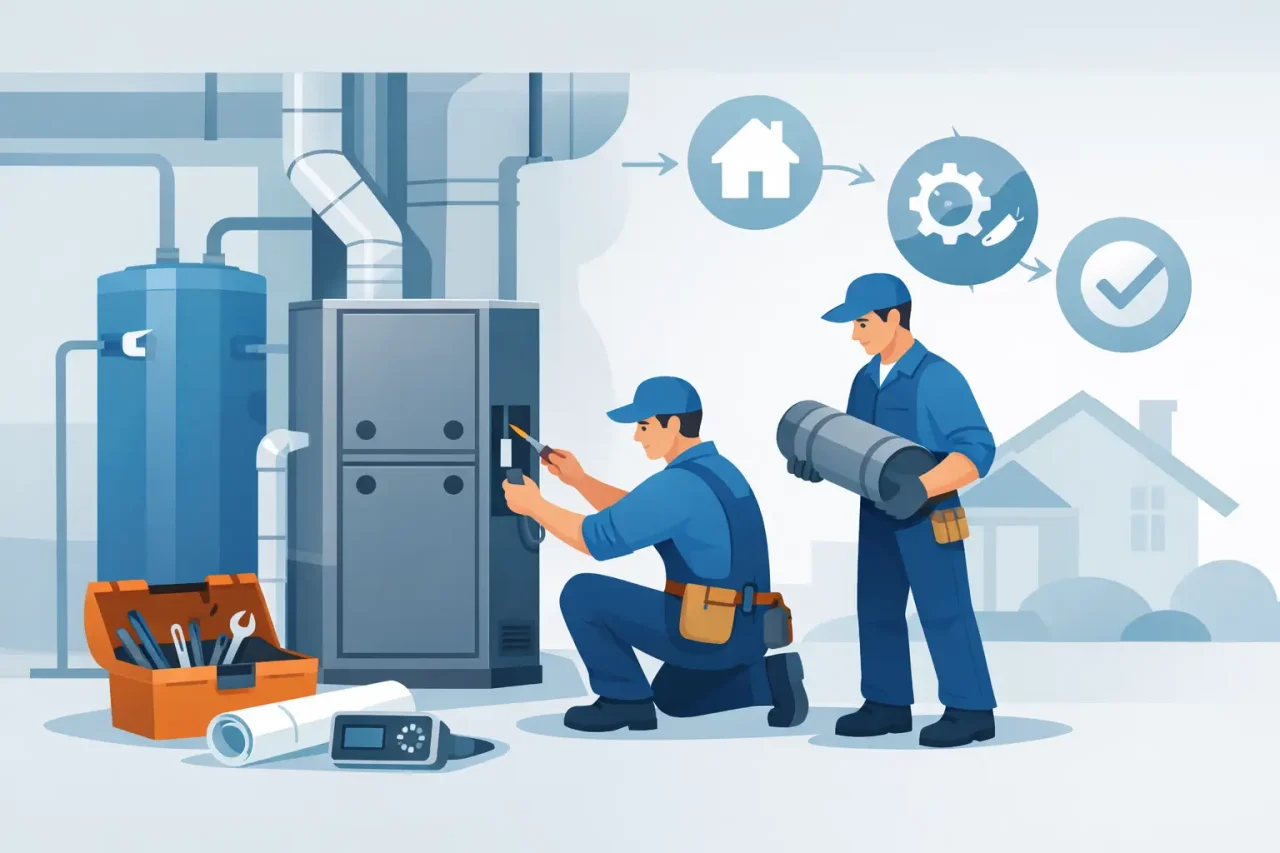
When your furnace is failing in the middle of a New York winter, you do not want guesswork. You want to know what happens next, how long it will take, what could slow the job down, and whether the new system will actually solve the heating problems you have been living with. The new furnace installation process matters because a furnace is not just swapped in like an appliance. It has to be matched to the building, installed safely, and tested carefully so your heat is dependable when temperatures drop.
Why the new furnace installation process matters
A lot of heating problems start before the first cold snap. An older furnace may still run, but it may short cycle, make loud noises, heat unevenly, or drive up fuel costs. In apartment buildings and commercial spaces, those problems can quickly turn into tenant complaints, comfort issues, and avoidable downtime.
A proper installation is what separates a furnace that simply turns on from one that heats efficiently and safely for years. Sizing, venting, gas connections, airflow, controls, and startup checks all affect performance. If one piece is off, you can end up with weak airflow, hot and cold spots, higher utility bills, or premature equipment wear.
Step 1: In-home assessment and heat load review
The first step in the new furnace installation process is evaluating the space. For a single-family home, that means looking at square footage, insulation levels, ductwork condition, ceiling height, window count, and how the current system has been performing. For a multifamily or commercial property, the review may also include occupancy patterns, building layout, and whether different zones have different heating demands.
This is where many rushed replacements go wrong. Bigger is not always better. An oversized furnace can cycle on and off too often, which wastes energy and creates uneven heating. An undersized furnace may struggle during the coldest days. The goal is to install a system that fits the building, not just one that matches the old unit’s nameplate.
If there are existing issues like poor airflow on upper floors, noisy ducts, or rooms that never stay warm, they should be discussed now. A new furnace alone may not fix those problems if the duct system or return air setup is part of the issue.
Step 2: Equipment selection and scope of work
Once the space is evaluated, the next step is choosing the right furnace. That usually means deciding on fuel type, efficiency rating, capacity, and compatibility with your thermostat and existing duct system. In many NYC-area properties, gas furnaces are common, but some buildings still rely on oil or have broader HVAC needs that affect the final recommendation.
This is also the point where a technician should explain what is included in the job. A true installation may involve more than the furnace itself. Depending on the building and the condition of the old system, the work may include venting updates, gas line adjustments, drain setup for a high-efficiency unit, filter rack replacement, thermostat work, safety controls, or duct modifications.
Straightforward pricing matters here. Property owners and managers should know whether the proposal covers removal of the old unit, disposal, permit-related work if required, startup testing, and warranty registration. Clear communication now prevents surprises later.
Step 3: Scheduling, permits, and job preparation
Not every installation has the same timeline. If the replacement is like-for-like and access is easy, the job may move quickly. In tighter urban spaces, older buildings, or jobs that need code-related updates, preparation can take more coordination.
Depending on local requirements, permits or inspections may apply. That is especially relevant when fuel connections, venting, or major modifications are involved. In occupied buildings, scheduling matters too. Homeowners want minimal disruption. Property managers often need work coordinated around tenants, supers, loading access, and building rules.
Preparation also includes protecting the work area and confirming the path for equipment removal and delivery. In a basement mechanical room, attic, closet, or utility area, access can change how long the job takes. A dependable HVAC team plans for these conditions instead of treating them like surprises.
Step 4: Removal of the old furnace
Before the new system goes in, the old one has to come out safely. That starts with shutting off fuel and power, disconnecting controls, and removing the equipment without damaging nearby components. If the furnace has been leaking, rusting, or producing soot, that condition may also point to related venting or combustion issues that need correction before the new unit is installed.
This step is more important than it sounds. An old furnace may have connections or duct transitions that were improvised years ago. Once the unit is removed, hidden problems often become visible, including damaged plenum sections, poor drain routing, aging shutoff valves, or unsafe flue connections. Some jobs stay simple. Others reveal work that should be addressed right away to protect safety and performance.
Step 5: Installing the new furnace
This is the core of the new furnace installation process. The new unit is set in place, leveled, connected to the duct system, tied into the fuel and electrical supply, and integrated with the thermostat and safety controls. If the furnace is a high-efficiency model, vent piping and condensate drainage must be installed correctly. If it is replacing an older standard-efficiency system, that may require changes to the existing setup.
Good installation work is not just about making everything fit. It is about making the system operate as designed. Airflow has to be right. Venting has to be safe. Connections have to be secure. In some properties, small duct or return air improvements can make a major difference in comfort once the new furnace is running.
For commercial spaces and larger residential properties, coordination with the rest of the HVAC system can also matter. If the furnace works alongside AC equipment, a heat pump, or smart thermostat controls, the setup needs to be checked as a complete system, not as a stand-alone box.
Step 6: Startup, testing, and safety checks
A furnace installation is not finished when the equipment is physically in place. It is finished when the system has been started, tested, and verified. That includes checking ignition, blower operation, airflow, temperature rise, thermostat response, gas pressure where applicable, and overall system performance.
Safety checks are a critical part of this stage. The installer should confirm that venting is correct, combustion is stable, and safety devices are functioning properly. In many cases, carbon monoxide safety is part of the conversation, especially when replacing an older furnace that may have shown signs of wear or venting problems.
This is also when homeowners and building managers should get a clear explanation of what was installed, how to operate it, how often to change filters, and what warning signs should prompt service. A quality handoff helps you get better long-term performance from the system.
What can affect timing and cost
Most customers want a simple answer on how long installation takes. The honest answer is that it depends on the building and the scope of work. A direct replacement may be completed in a day. A job that includes venting updates, duct adjustments, control upgrades, or access challenges may take longer.
Cost is shaped by similar factors. Furnace efficiency, system size, building layout, fuel type, code requirements, and the condition of related components all affect the final price. If you are comparing estimates, make sure you are comparing the same scope. A lower quote may leave out necessary items that show up later as added charges.
In the New York City area, older housing stock and tighter mechanical spaces often make experience especially valuable. A team that works locally knows how to move fast without cutting corners, and that matters when heat loss is urgent.
How to prepare for installation day
If your installation is scheduled, a little preparation helps the job move faster. Clear the path to the furnace area, secure pets, and make sure someone can answer access questions if the technician needs to get to a basement, utility closet, roof area, or service room. In multifamily or commercial buildings, notifying the right contacts ahead of time can prevent delays.
It also helps to ask a few practical questions before the crew arrives. Will the heat be off all day? Will thermostat settings need to be reprogrammed? Is there anything you should monitor during the first 24 hours? Those are simple questions, but they give you a better sense of what to expect.
Choosing an installer matters as much as choosing the furnace
Even the best equipment can underperform if the installation is rushed or poorly planned. That is why experience, licensing, insurance, and same-day responsiveness matter, especially during the heating season. You want technicians who can diagnose the whole system, explain the work clearly, and take responsibility for getting the building warm again.
For homeowners, that means comfort and peace of mind. For property managers and commercial operators, it means fewer callbacks, fewer complaints, and less disruption. At FT’s Precise Heating & Cooling, that standard is simple – protect comfort, protect safety, and restore dependable heat without unnecessary delays.
If you are replacing an aging system before winter or dealing with a furnace that has already started to fail, the best next step is not to wait for a complete breakdown. A well-planned installation today is often what prevents the emergency call tomorrow.